Category: News

  • Salem’s Daughter Opens the Bluegrass Players’ Spooky Season

    Salem’s Daughter Opens the Bluegrass Players’ Spooky Season

    The Bluegrass Players’ spooky season is officially underway! Salem’s Daughter opened this weekend at The Spotlight Playhouse, and we are so proud of the hard work our actors have put into this production. From the first rehearsal to opening night, the dedication this cast has shown has been remarkable, and it shows on stage.

    Salem’s Daughter is a gripping tale of mystery and suspense that jumps from 1691 Salem to the present day, where a group of high school seniors’ fateful decision eight years ago comes back to haunt them. It’s the perfect show to kick off our Halloween season: atmospheric, thrilling, and impossible to look away from.

    We’re super excited to share this production with our community, and we can’t wait for you to experience it. Congratulations to the entire cast and crew on a wonderful opening weekend!

    Come gather your friends, embrace the season, and see Salem’s Daughter for yourself.

    Salem’s Daughter — by Craig Sodaro, directed by Dana Hendren
    September 18–27, 2026
    Fridays & Saturdays at 8:00 p.m. · Sundays at 4:00 p.m.
    Pay What You Can: Friday performances are name-your-own-price
    Recommended for ages 13+
    The Spotlight Playhouse — 214 Richmond Rd, Berea, KY

  • The Top Five Things to Do When You Visit Berea, Kentucky

    Berea, Kentucky sits right off I-75 at Exit 77, and it has earned the name “The Folk Arts and Crafts Capital of Kentucky.” If you have a day or a weekend, here are five stops that give you the full picture. They are all local, all walkable or a short drive apart, and all free to enter except where noted.

    1. Kentucky Artisan Center

    The Kentucky Artisan Center is the best first stop, and not only because it is the first thing you reach off the interstate. It is a state-run center on Artisan Way that showcases the work of more than 800 Kentucky artisans, from handmade furniture and pottery to music, books, and specialty foods. Admission is free, and it is open every day from 9:00 a.m. to 6:00 p.m. There is a cafe inside, rotating exhibits, and a staff that can point you to the rest of Berea. If you want one place to understand what this town makes, start here.

    2. The Spotlight Playhouse

    The Spotlight Playhouse at 214 Richmond Road is Berea’s theater, event center, and performing arts school under one roof. It hosts more than 125 performances a year, split between Spotlight Acting School (the youth and community classes) and The Bluegrass Players (the community theater troupe). A night at the Playhouse is the easiest way to see the town’s creative energy in motion. Check the schedule before you visit, because shows sell and the building is alive most weekends.

    3. L&N Train Depot, Berea Tourism Office

    The Berea Welcome Center is housed in a restored 1917 L&N Railroad Depot, one of the few such depots still standing, and it is listed on the National Register of Historic Places. Inside you will find visitor information, maps, and the kind of local guidance you cannot get from a search bar. It is also a good landmark: the artisan shops and galleries of Old Town Berea are within walking distance, so park once and wander.

    4. Berea College Log House Sales Room

    The Log House Craft Gallery is the oldest and largest continually running craft gallery in Kentucky. It is the flagship shop for Berea College Student Crafts, where you can buy work made by the college’s own students in wood, weaving, wrought iron, broomcraft, and ceramics. The gallery sits on the Berea College campus and carries the work of more than 470 artists from the Appalachian region and beyond. If you want to take home something made by hand in this town, this is the place.

    5. The Pinnacles Hiking Trails

    The Pinnacles are the hiking trails on Berea College’s forested land, with overlooks that give you the wide view back over the town and the rolling country around it. The trails are open to the public, and the climb to the main overlook is a short, steady walk that rewards you with one of the better views in central Kentucky. Wear real shoes, bring water, and check the trailhead and seasonal access information before you head out, because the college manages the land and conditions can change.

    Plan the day

    Hit the Artisan Center first for the lay of the land, walk Old Town from the Depot, browse the Log House, catch a show at the Playhouse if one is running, and save the Pinnacles for the afternoon light. Berea is small enough that you can do all five in a single day without rushing, or stretch them across a slow weekend. Either way, you leave having seen the thing the town is built around: people making things, and glad to show you how.

  • Forged for the Forest: The Weapons of Wolves of Sherwood

    Forged for the Forest: The Weapons of Wolves of Sherwood

    Wolves of Sherwood is a dark, fight heavy show, and every character carries a weapon. That is a tall order for any prop shop. For ours, it meant a family maker venture called Camp Creations.

    Ken Koshman and Albert Lindsay built the pieces for our run, and they did not treat them like toys. Each weapon has a backstory. One broken sword was shaped as if a character had found it snapped and filed it sharp. The Sheriff’s gear carries a snake motif pulled from the script. They even shaped a hickory longbow for Robin, then agreed it stays decorative because someone would absolutely lose an eye.

    The Sheriff's serpent sword, coiled guard and snake headed pommel by Camp Creations.
    The Sheriff’s serpent sword, coiled guard and snake headed pommel by Camp Creations.

    Ken liked the world so much he ended up in it, stepping in as Guy of Gisborne when a cast change left the role open. The production still of him on stage in the costume says it all.

    BereaOnline wrote an article about this. We are sharing their perspective from our side: read the full story of how these two got from a childhood Kleenex box AT AT to our stage.

    Come see the work in action this season.

  • Zombie Night: The Musical Brings Comic Undead Mayhem to the Playhouse

    Zombie Night: The Musical Brings Comic Undead Mayhem to the Playhouse

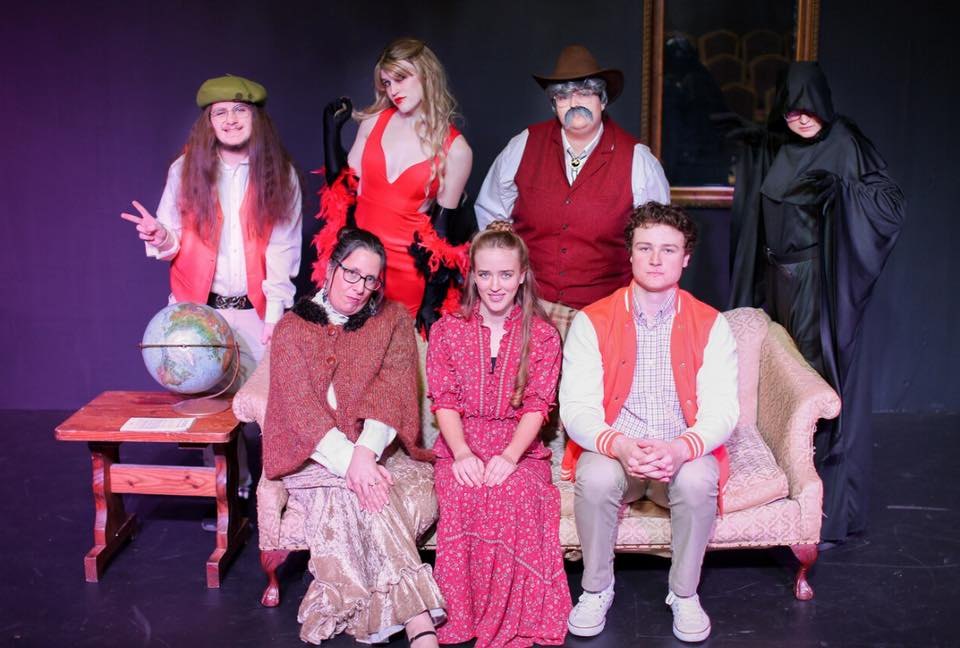
    Zombie Night: The Musical brings a comic outbreak of undead mayhem to The Spotlight Playhouse this fall, with the Bluegrass Players presenting five performances between October 23 and November 1.

    The production is directed by Chad Hembree, with a book by Tim Kelly, music by Bill Francoeur, and lyrics by Scott DeTurk. It is being produced by special arrangement with Pioneer Drama Service.

    A musical built for a crowded stage

    The story begins with a group of high school students planning their annual Zombie Night party. They choose an abandoned farmhouse beside an old graveyard, a decision that gives the evening exactly the kind of complication the title promises. As the dead begin to leave the cemetery, the party turns into a musical comedy thriller filled with songs, movement, comic characters, and theatrical zombie makeup.

    The cast list reflects the production’s ensemble nature. Alongside the central characters are ghosts, students, zombies, and other supporting roles that help turn the farmhouse and graveyard into a full stage world. That kind of large-group work is part of what makes community theater different from a production built around only a few performers. The audience sees the finished scenes, but the energy comes from many people reacting, moving, and building the same moment together.

    What to expect at the Playhouse

    Zombie Night: The Musical is listed as family-friendly, with all ages welcome. Audiences can expect a spooky setting without the show losing its comic spirit. The production draws on the familiar language of classic zombie stories, then turns it into a live musical filled with exaggerated characters and Halloween-season fun.

    The Bluegrass Players are the community theater troupe performing at The Spotlight Playhouse. Their productions bring together people with different levels of stage experience for a particular show, and the result changes each time a new cast steps into the room. For Zombie Night, that means the story’s ghosts, medical characters, students, and undead ensemble will all be shaped by the performers appearing in this production.

    Performance dates

    • Friday, October 23 at 8 p.m.
    • Saturday, October 24 at 8 p.m.
    • Sunday, October 25 at 4 p.m.
    • Friday, October 30 at 6 p.m.
    • Sunday, November 1 at 2 p.m.

    There is no performance on Saturday, October 31. The show will be presented at The Spotlight Playhouse, 214 Richmond Road, Berea, Kentucky.

    Tickets and performance information are available through the Playhouse box office.

  • Wolves of Sherwood: A New Chapter in the Robin Hood Story

    Wolves of Sherwood: A New Chapter in the Robin Hood Story

    Robin Hood stories usually end with the outlaw firmly established at the center of the legend. Wolves of Sherwood takes a different path, asking what happens when the next generation has to live with the choices, enemies, and reputation handed down by the people who came before them.

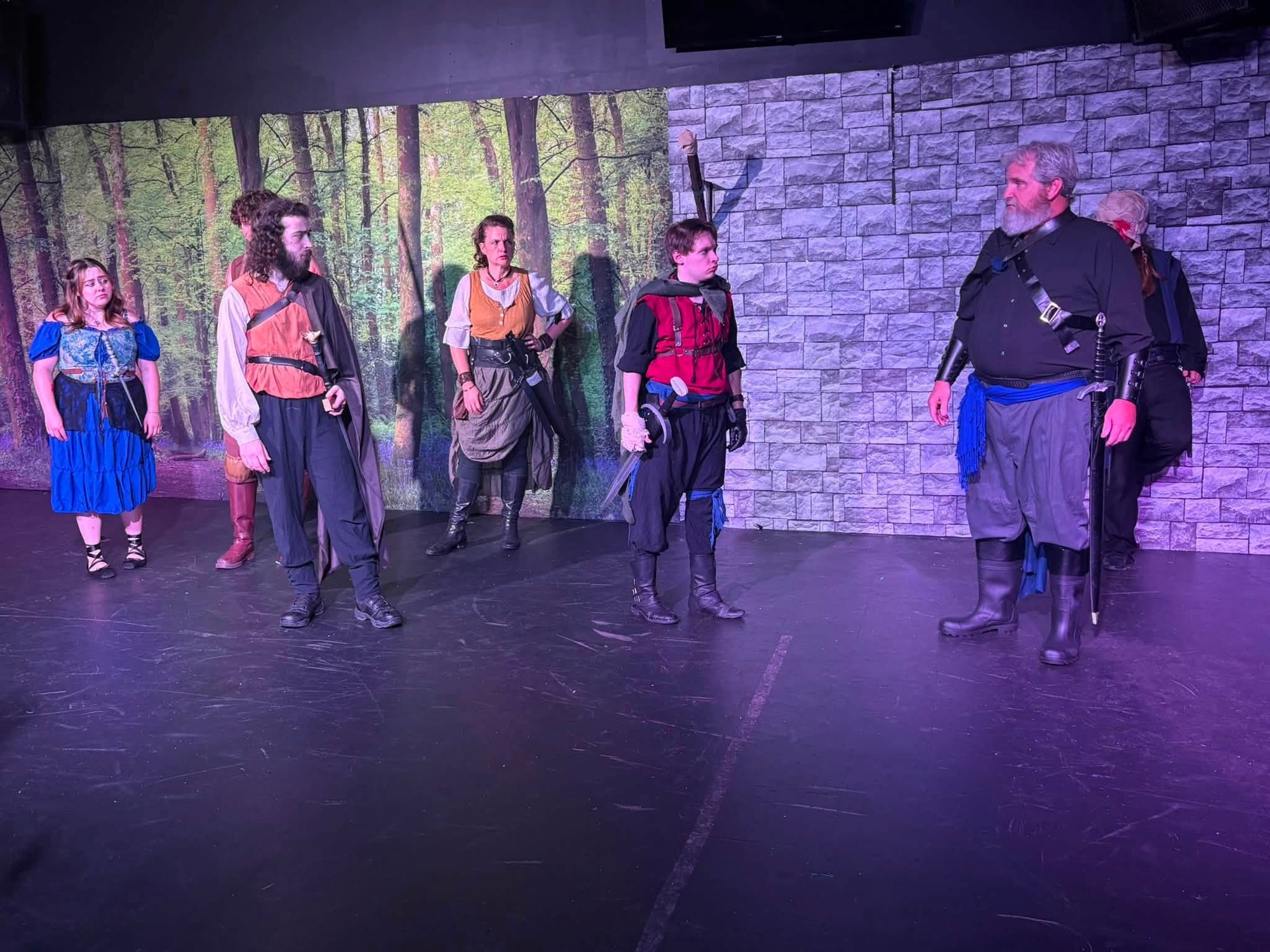
    The Bluegrass Players presented Chelsea Frandsen’s drama at The Spotlight Playhouse from July 31 through August 8, 2026. Directed by Luke Madden, the production brought the Sherwood legend into a story about family, loyalty, power, and the pressure of inheriting a famous name.

    A Robin Hood story about the people who come next

    At the center of the play is Cassian of Locksley, the son of Robin Hood and Marion. He has grown up surrounded by the story of his father’s courage, but that history does not make it easy to establish an identity of his own. The return of old enemies pulls Cassian and the people around him into a conflict shaped by family ties, political maneuvering, romance, betrayal, and questions of loyalty.

    The play is part of Frandsen’s larger Sherwood Cycle, but the local production was presented as a story audiences could follow on its own. Its focus is not simply on repeating the familiar Robin Hood legend. It looks at what a legend costs the people who inherit it, especially when younger characters are ready to make decisions for themselves.

    Community theater with a physical edge

    Wolves of Sherwood gave the Bluegrass Players a production built around movement as well as dialogue. Swords, stage combat, and the changing relationships among the characters helped establish the world of Nottingham and Sherwood Forest inside the Playhouse.

    That physical work also shows why a live production cannot be reduced to its script or its premise. The cast has to move safely, respond to one another, and make every confrontation readable from the audience. In a community theater production, those choices are developed by local performers and a local production team over the course of rehearsal.

    A local stage for new stories

    The production was presented at The Spotlight Playhouse, 214 Richmond Road in Berea. Heartland Plays, Inc. provided the licensing arrangement for Frandsen’s script.

    For the Bluegrass Players, a show such as Wolves of Sherwood is another way to give local performers substantial material while giving Berea audiences access to stories they might not otherwise encounter onstage. The familiar Robin Hood setting offered an entry point, but the production’s real interest was in the people trying to decide what should happen after the legend has already been written.

    Wolves of Sherwood included adult themes and was recommended for audiences ages 13 and older.

  • Macbeth Ends a Community-Built Season at The Spotlight Playhouse

    Macbeth Ends a Community-Built Season at The Spotlight Playhouse

    Macbeth closed the Bluegrass Players’ 2026 spring season with a large, local ensemble and a production built around the play’s most direct theatrical strengths: prophecy, ambition, fear, and the consequences of trying to force the future.

    The production ran at The Spotlight Playhouse from June 19 through June 28, closing the venue’s 23rd season. Edwin Tait directed, with Jennifer Woodruff serving as assistant stage manager. Thirty-five local performers took part in the production.

    A Shakespeare story that moves

    Macbeth can sound intimidating before the curtain rises. The language is old, the reputation is enormous, and the play is often treated as something students are expected to study rather than something audiences can simply experience.

    Onstage, the story is much more immediate. A soldier hears a prediction about power, begins to believe it, and makes a series of choices that change his life and destabilize the kingdom around him. The witches, battles, ghosts, and political reversals give the production a strong physical rhythm, while the central question stays simple: what will a person sacrifice to become the person they think they are meant to be?

    Why a large cast matters

    A cast of 35 changes the scale of a community production. It puts more local performers in the room, creates more connections among families and friends, and gives the stage a sense of a whole society being affected by Macbeth’s decisions.

    That is one of the strengths of the Bluegrass Players’ work at The Spotlight Playhouse. The troupe gives local actors the chance to take on substantial material, while audiences in Berea get to see ambitious stories performed close to home. Shakespeare does not have to be reserved for a distant professional stage. It can happen on Richmond Road, with neighbors helping build the world together.

    Part of the Bluegrass Players’ story

    The Bluegrass Players started in 2014. Since then, the troupe has continued to bring plays, musicals, mysteries, and other productions to the Playhouse, with each cast creating a different version of the community onstage.

    Macbeth closed one season, but it also showed what local theater can do when a large group commits to a difficult, familiar, and still sharply relevant story.

    Macbeth was presented at The Spotlight Playhouse, 214 Richmond Road, Berea, Kentucky.

  • The Secret Garden Grows Into a New Local Stage Story

    The Secret Garden Grows Into a New Local Stage Story

    The Secret Garden brought a familiar story to The Spotlight Playhouse through a new adaptation by local artist Dana Hendren, who also directed the Bluegrass Players production.

    Based on Frances Hodgson Burnett’s classic novel, the play follows Mary Lennox after she is sent to live at Misselthwaite Manor. The locked garden she discovers becomes more than a setting. It becomes a way for Mary and the people around her to move through grief, loneliness, and the possibility of change.

    A garden as a piece of theater

    The central idea is simple enough for any audience to understand. A neglected place can begin to live again when someone gives it attention. In the play, Mary asks for a bit of earth, finds allies in Dickon and Colin, and gradually becomes part of a world she initially approaches with anger and suspicion.

    That gives the production a quiet kind of theatrical challenge. The story depends less on spectacle than on watching relationships shift. Small discoveries matter. A door opens. A friendship forms. A character who has been shut away begins to imagine a different life.

    Local work on a familiar foundation

    Hendren’s adaptation placed a local voice between Burnett’s original story and the audience in Berea. The result was not simply a return to a well-known book. It was a chance for local performers and theater workers to decide what parts of the story needed to be most visible on this stage.

    That is an important part of community theater. Familiar titles can welcome an audience into the room, while a new adaptation gives the people making the production room to contribute something of their own.

    The Bluegrass Players at work

    The Bluegrass Players are the community theater troupe performing at The Spotlight Playhouse. Their productions bring together performers and production teams for individual shows, and the character of each production comes from the people who make it.

    With The Secret Garden, the company focused on a story about renewal and the slow work of helping something neglected come back to life. That is a fitting subject for a local stage, where each new production depends on people choosing to open the door and begin again.

    The Secret Garden was presented at The Spotlight Playhouse in Berea, Kentucky, in May 2026.

  • The Adventure of the Clutching Claw Turns Melodrama Into Audience Play

    The Adventure of the Clutching Claw Turns Melodrama Into Audience Play

    The Adventure of the Clutching Claw opened the Bluegrass Players’ 2026 season by leaning into one of theater’s most openly playful forms: the melodrama.

    The production ran January 9 through January 18 at The Spotlight Playhouse in Berea. Instead of asking the audience to sit quietly and observe from a distance, the show invited people to react, take sides, cheer for the hero, and boo the villain.

    What makes a melodrama work?

    Melodrama is built from clear theatrical ingredients. The good characters are unmistakably good. The villains are comfortable being bad. The danger is exaggerated, the emotions are large, and the audience is part of the rhythm of the evening.

    That does not mean the form is careless. Melodrama depends on timing. Performers have to know when to hold a reaction, when to push a gesture, and when to leave room for the audience to answer back. The best version of this kind of show understands that the crowd is not interrupting the story. The crowd is helping complete it.

    A different way to spend a night at the theater

    The Clutching Claw offered a comic mystery with twists, reversals, and opportunities for audience participation. It was designed as an accessible night out for people who already enjoy live theater and for people who may be more comfortable starting with something broad, funny, and clearly welcoming.

    That range is useful for a community theater. A season does not have to sound the same from one production to the next. A serious drama can be followed by a musical, a mystery, or a show that lets the audience make noise and take part in the action.

    Starting the year together

    The Bluegrass Players are a production-based community theater troupe. Each show brings its own cast, creative team, and particular demands, but the common thread is the effort to make live theater in Berea.

    The Adventure of the Clutching Claw began 2026 with a reminder that theater does not always need to be solemn to be meaningful. Sometimes the shared experience is the point: a room full of people responding to the same entrance, secret, revelation, or villainous scheme at the same time.

    The Adventure of the Clutching Claw was presented at The Spotlight Playhouse, 214 Richmond Road, Berea, Kentucky.

  • A Merry Mishap Made Dinner Theater Part of the Mystery

    A Merry Mishap Made Dinner Theater Part of the Mystery

    A Merry Mishap turned the Bluegrass Players’ 2025 Christmas showcase into a shared evening of food, comedy, clues, and audience participation at The Spotlight Playhouse.

    The original Christmas dinner show was written and directed by Chad Hembree and performed December 19 through December 21, 2025. More than 40 performers took part in the production, bringing multiple generations of actors together for a holiday mystery built around a missing fundraising chest.

    When the audience becomes part of the room

    Dinner theater changes the relationship between the stage and the audience. People are not only watching a story. They are eating together, noticing what happens around them, and deciding whether a clue or suspicious behavior might matter later.

    In A Merry Mishap, the missing chest gave the evening its central question, while the characters and interruptions kept the investigation moving. The mystery was meant to be enjoyed socially. Solving it was part of the fun, but so was watching the people at the tables compare theories and react to the performers.

    A holiday show with a local shape

    The production was created specifically for the Playhouse rather than imported as a familiar holiday title. That gave the cast and creative team room to build a Christmas event around the people, humor, and rhythms of the local theater community.

    The Bluegrass Players have used the Christmas showcase over the years as a place for performers with different kinds of experience to share the stage. A Merry Mishap continued that tradition while adding a full dinner-show format and an audience-led mystery.

    Why dinner theater works here

    A dinner show asks the theater to function as more than a room where people sit in rows. The meal, the cast, the service, the timing, and the story all have to work together. When they do, the evening feels less like attending a performance and more like entering an event that only exists for the people in that room.

    That was the appeal of A Merry Mishap. It gave Berea audiences a holiday gathering with live performers at the center, while letting the community theater troupe try a format that depends on participation as much as presentation.

    A Merry Mishap was presented by the Bluegrass Players at The Spotlight Playhouse in December 2025.

  • Little Women Finds Its Christmas Heart in Berea

    Little Women Finds Its Christmas Heart in Berea

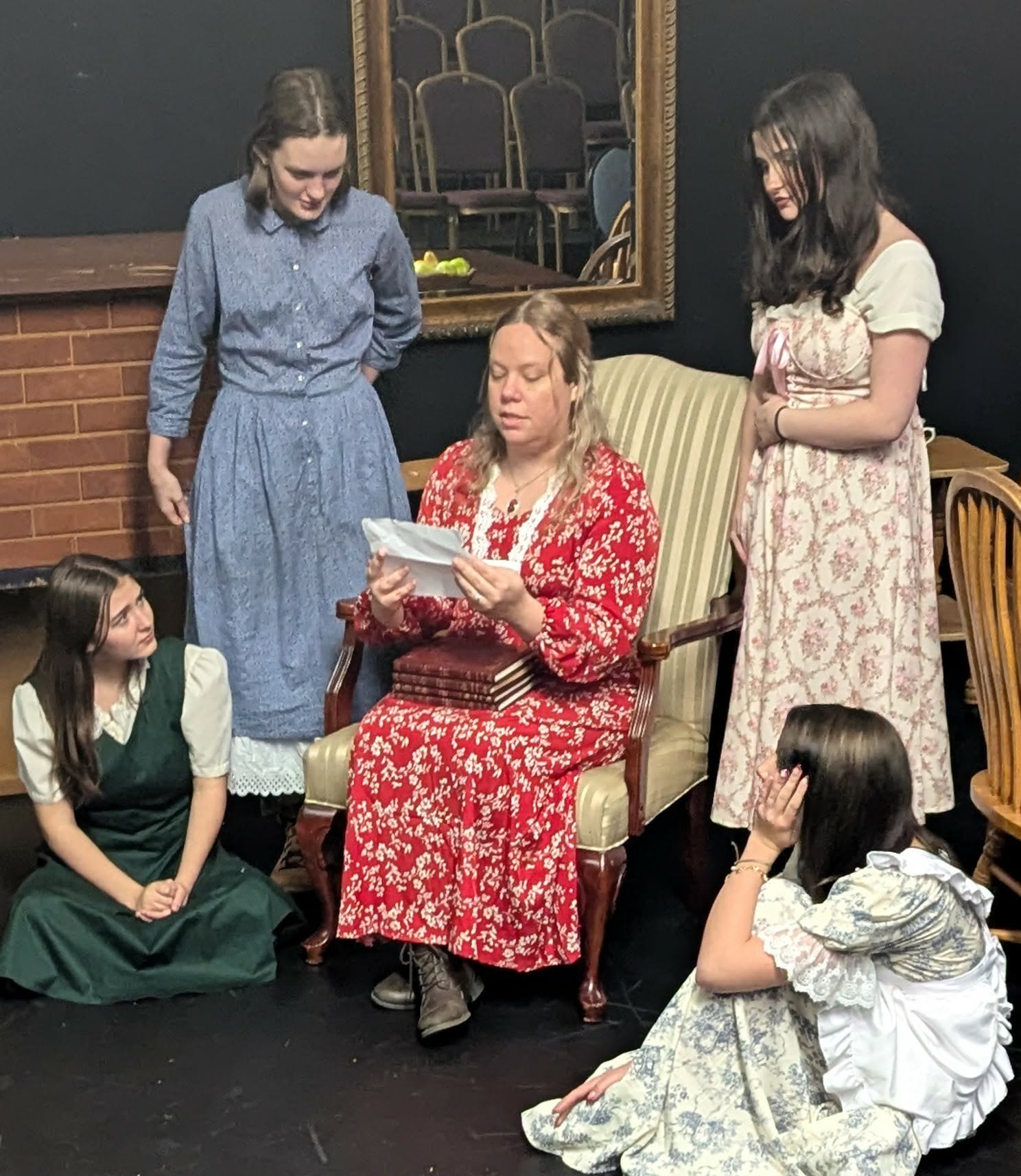
    Little Women: Christmas at the March House brought the March family together for a Christmas Eve story shaped by modest circumstances, strong affection, and the small acts of kindness that make a holiday feel abundant.

    The Bluegrass Players production was an original adaptation by Chad Hembree, directed by Dana Hendren, and presented at The Spotlight Playhouse in December 2025.

    A familiar family seen through one winter evening

    Louisa May Alcott’s four March sisters have endured because their story is larger than any single period setting. Meg, Jo, Beth, and Amy disagree, dream, compete, and care for one another while their father is away serving in the Civil War.

    This adaptation narrowed the focus to Christmas Eve. That choice gave the production a clear emotional center: the family has limited money, but the house is full of memories, letters, imagination, and the kind of generosity that cannot be bought in a store.

    What local theater adds

    A well-known story arrives differently when it is made by a local cast. The audience recognizes the broad outline, but the relationships, timing, and atmosphere belong to the performers in the room and to the creative team shaping this particular version.

    That is part of the appeal of the Bluegrass Players. The troupe started in 2014 and continues to give local performers opportunities to build a production together at The Spotlight Playhouse. Each show becomes its own temporary community, with its own energy and interpretation.

    The meaning of a small Christmas

    Little Women: Christmas at the March House did not need a grand holiday spectacle to make its point. Its Christmas was found in shared stories, simple gifts, sacrifice, and the decision to care for one another when circumstances are difficult.

    That remains one reason Alcott’s family story continues to fit the season. The March household is not wealthy or secure, but it is connected. In this production, that connection was the thing that filled the room.

    Little Women: Christmas at the March House was presented at The Spotlight Playhouse in Berea, Kentucky, December 5–13, 2025.

Bluegrass Players

Community theater at The Spotlight Playhouse in Berea, Kentucky

Copyright 2026 Bluegrass Players